
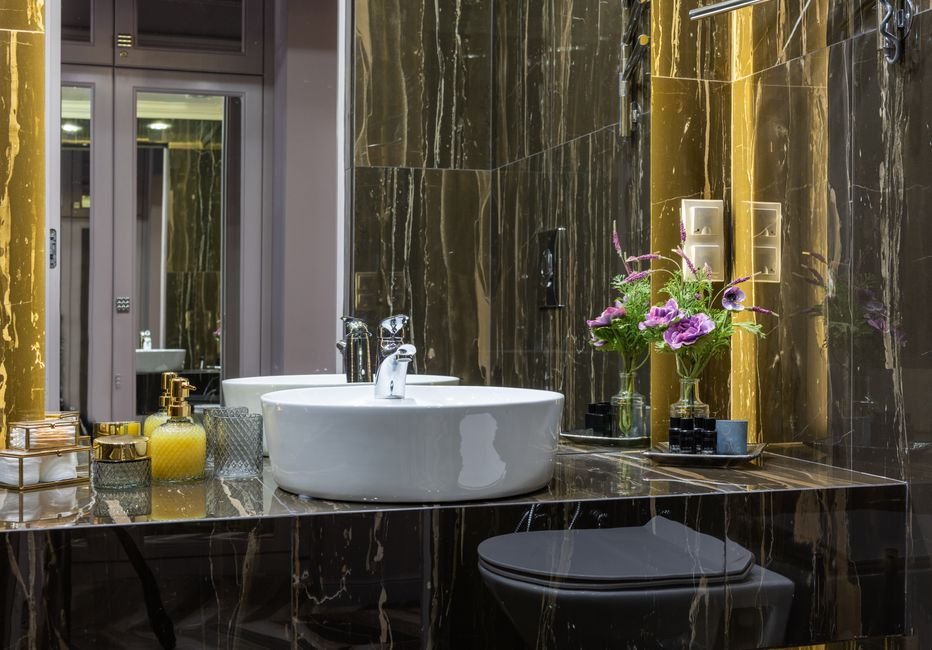
Homeowners spend an average of $1,200 to $3,000 on bathroom countertops, often overlooking how the right material affects both look and functionality. This guide highlights seven materials that provide a strong combination of durability and aesthetic appeal for any bathroom renovation.
Whether you’re focused on long-term durability, ease of upkeep, or pure luxury, these options have something for everyone. Let’s explore what stands out in each category and why you might choose one over another.

1. Granite
Granite is a household favorite for a reason. This natural stone is incredibly durable, resistant to scratches and heat, and offers a unique look with every slab. It’s an investment worth making if you want your bathroom to feel upscale. Homeowners who plan to stay in their homes long-term will appreciate its longevity and low maintenance needs.
However, keep in mind that granite requires sealing every year or two to stay resistant to stains. A proactive maintenance routine will keep it looking its best.
2. Quartz
Quartz countertops are engineered stone surfaces made from about 90% natural quartz and resin. This blend means you get the durability of granite without the porous surface, making them stain-resistant and non-porous. If you have kids or are concerned about spills, quartz is a smart choice. It also comes in a variety of colors and patterns, allowing for customization.
Just avoid exposing quartz to extreme heat, as it can warp or get damaged. A heat pad is a worthy investment for this one.
3. Marble
For those who desire a classic, luxurious look, marble is king. Its unique veining adds a one-of-a-kind quality, and there’s nothing quite like the elegance it can impart. However, while it can be stunning, marble is softer and more prone to scratches and stains compared to granite or quartz. Therefore, it suits those who prioritize aesthetics over high durability.
Seal your marble countertops frequently to protect against staining and etching. Carrying a specialized cleaner designed for marble is a good idea, too.
4. Solid Surface
Solid surface materials like Corian allow for seamless joins, making them great for creating a clean, modern aesthetic. They come in many colors and patterns, are non-porous, and easy to clean. This material works exceptionally well for those desiring a simple, contemporary look or those who want a countertop that can be easily repaired. Even minor scratches can typically be sanded out.
However, be cautious. Solid surfaces are softer than natural stones, so avoid placing hot pots directly on them.
5. Concrete
Concrete countertops have seen a rise in popularity due to their industrial charm and customizable nature. You can tint, shape, and even embed materials to create a unique look. However, concrete can crack if not installed properly and requires a sealant to protect against moisture, especially in a bathroom.
Opt for professional installation to ensure proper curing and sealing, making it a long-lasting choice. If you appreciate a personalized vibe, concrete can truly reflect your style.
6. Laminate
For an affordable option, laminate can’t be beaten. Available in countless colors and patterns, including designs that mimic more expensive materials like granite or marble, it’s great for those on a tight budget. Laminate is easy to clean and maintain, making it practical for family bathrooms or guest rooms.
However, laminate isn’t as durable as stone options and can chip or scratch more easily, so keep it out of heavily used spaces. It’s best for those who want something stylish without breaking the bank.
7. Wood
Wood countertops lend a warm, natural look to a bathroom. They age beautifully and can be a stunning anchor feature in rustic or farmhouse designs. However, wood is susceptible to water damage if not sealed properly, making it essential to maintain a regular sealing schedule.
To protect wooden surfaces, always use a cutting board and wipe up spills immediately. If you love a cozy, inviting space, wood can provide that essence beautifully.

How to Choose
For those prioritizing durability and ease of maintenance, quartz is the top choice, especially in busy family bathrooms. However, if luxury is your goal in a guest bath that sees less foot traffic, marble offers an elegant touch. Budget-conscious homeowners should consider laminate, which provides a low-cost alternative with decent durability. Additionally, explore the best materials for bathroom countertops to make an informed decision.
See also our take on silestone countertops key differences.
If that matters to you, our piece on review features and fit goes further.
Frequently Asked Questions
What is the most durable material for bathroom countertops?
Quartz is considered one of the most durable materials for bathroom countertops due to its non-porous surface and resistance to scratches and stains. It also withstands moisture well, making it ideal for a wet environment like a bathroom.
How do I choose a bathroom countertop material?
When choosing a bathroom countertop material, consider factors such as durability, maintenance requirements, cost, and aesthetic appeal. It's also important to think about your usage patterns and whether you need a material that can withstand heavy wear or is easy to clean.
Which bathroom countertop material is easiest to clean?
Materials like quartz and solid surface are among the easiest to clean because of their non-porous nature, which prevents stains and makes them resistant to bacteria. Just a simple wipe-down with mild soap and water is usually sufficient to keep them looking pristine.
Can quartz be used for bathroom countertops?
Yes, quartz can absolutely be used for bathroom countertops. It's a great choice because it is durable, non-porous, and available in a wide range of colors and designs.
Why is granite popular for bathroom countertops?
Granite is popular for bathroom countertops because of its natural beauty, uniqueness, and durability. It adds value to a home while being resistant to heat and scratches, making it a practical choice for areas that experience daily use.