
How to Remove Rust from Bathroom Sink Safely and Effectively involves using a mixture of baking soda and vinegar to create a powerful yet gentle cleaning solution. This natural method not only eliminates rust stains but also protects your sink's surface without harsh chemicals, ensuring both cleanliness and safety. Addressing rust promptly can enhance your bathroom's appearance and maintain its hygiene.
However, removing it effectively without damaging your sink is entirely possible. We’ve compiled the ultimate guide on how to remove rust from a bathroom sink using tried-and-tested methods, both natural and chemical.
What Causes Rust Stains on Bathroom Sinks?
Before jumping into removal techniques, it’s essential to understand what causes rust stains:
Iron-rich water: Water with high iron content leaves red-orange deposits over time.
Metal items left on wet surfaces: Razor blades, shaving cream cans, or tools can oxidize and transfer rust to your sink.
Old plumbing systems: Corroded pipes may leak rust into the water supply.
Enamel and porcelain damage: Cracks or chips allow rust to form underneath.
Identifying the cause helps prevent recurrence after cleaning.
Tools and Materials You Will Need
Having the right tools ensures both effective rust removal and preservation of the sink surface. Here’s a basic list:
White vinegar
Baking soda
Lemon juice
Table salt
Hydrogen peroxide
Cream of tartar
Pumice stone (for porcelain sinks only)
Soft-bristled brush or sponge
Rubber gloves
Commercial rust removers (optional)
Method 1: Remove Rust from Sink Using White Vinegar and Baking Soda
Step-by-Step Instructions:
1. Apply Baking Soda Directly: Sprinkle a generous amount over the rust stains.
2. Pour White Vinegar Over It: Let it fizz and sit for 15–20 minutes.
3. Scrub Gently: Use a soft sponge or brush to scrub in circular motions.
4. Rinse Thoroughly: Use warm water to wash away the mixture.
5. Repeat if Needed: For stubborn stains, repeat the process until fully removed.
Why it works: The combination of acetic acid and sodium bicarbonate breaks down iron oxide without scratching the sink’s surface.
Method 2: Use Lemon Juice and Salt for Natural Rust Removal
This natural, non-toxic rust removal method is ideal for stainless steel or porcelain sinks.
Instructions:
1. Coat the Stain with Salt: Regular table salt acts as a gentle abrasive.
2. Squeeze Fresh Lemon Juice Over It: Saturate the salt completely.
3. Let It Sit for 2–3 Hours: The citric acid in lemon dissolves rust particles.
4. Scrub and Rinse: Use a brush or cloth, then rinse with warm water.
Pro Tip: For deeper stains, warm the lemon juice slightly before applying.
Method 3: Hydrogen Peroxide and Cream of Tartar Paste
Perfect for older rust stains that haven’t responded to milder treatments.
Steps:
1. Mix Equal Parts: Combine hydrogen peroxide and cream of tartar into a thick paste.
2. Apply Generously: Spread the paste over the rust stain using a cloth.
3. Leave for 30 Minutes: Allow it to penetrate and dissolve the stain.
4. Scrub and Rinse: Gently scrub and rinse clean with water.
Note: Always test a small area first to ensure compatibility with your sink surface.
Method 4: Commercial Rust Removers (CLR, Bar Keepers Friend, etc.)
When natural remedies fail, commercial rust removers are highly effective but must be used with care.
How to Use:
1. Wear Gloves and Ensure Ventilation
2. Apply Cleaner as Directed: Follow manufacturer’s guidelines strictly.
3. Let Sit Briefly: Usually 2–5 minutes.
4. Scrub with a Soft Brush: Avoid metal scrubbers that can damage enamel.
5. Rinse Thoroughly
Warning: Some rust removers contain strong acids. Avoid prolonged exposure and always keep them away from children and pets.
Method 5: Pumice Stone for Porcelain Sinks Only
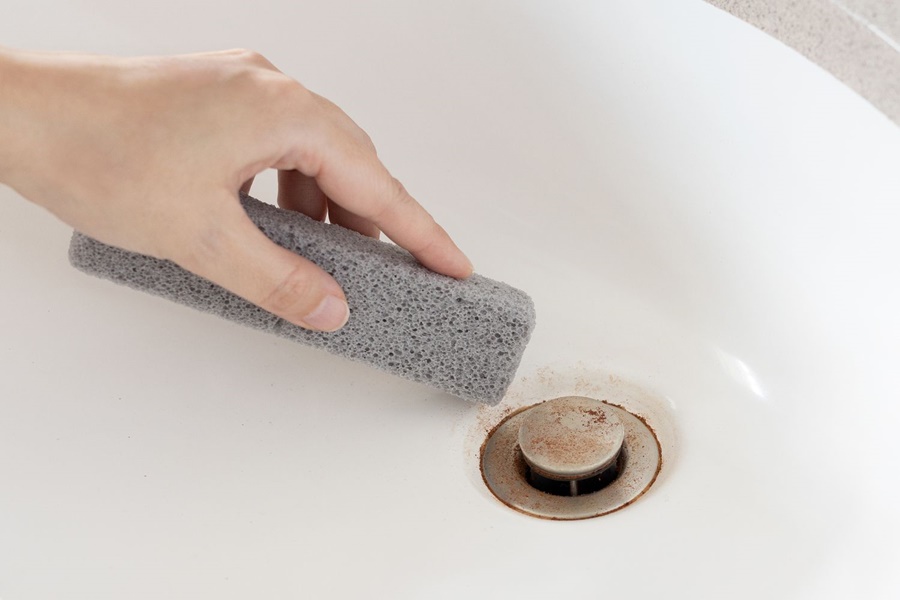
If you have a porcelain sink, a pumice stone can remove rust mechanically without damage if used correctly.
Steps:
1. Wet the Pumice Stone and Sink Surface
2. Rub Gently Over Stain: Apply light pressure to avoid scratching.
3. Wipe and Rinse: Clean with a damp cloth and rinse thoroughly.
Caution: Never use pumice on fiberglass or stainless steel; it can cause irreversible damage.
Preventing Rust Stains in Your Bathroom Sink
Once you’ve removed the rust, prevention is key to keep your sink spotless.
Install a Water Softener: Reduces iron content in hard water.
Dry Sink After Use: Moisture accelerates oxidation.
Store Metal Items Elsewhere: Keep razors and cans off sink surfaces.
Use a Sink Protector Mat: Prevents scratches and pooling water.
Regular Cleaning: Weekly maintenance with mild cleaners prevents buildup.
Common Mistakes to Avoid When Removing Rust
Many homeowners rush the cleaning process, thinking more scrubbing equals better results. In reality, excessive scrubbing can damage the sink's surface. Always test your cleaning method on a small area first.
Another frequent mistake is using abrasive tools on sensitive materials. Avoid steel wool or harsh scouring pads on porcelain sinks. Instead, opt for softer alternatives like microfiber cloths or soft sponges to preserve the finish.
Cost Comparison of Rust Removal Methods
The cost of rust removal varies depending on the method you choose. Natural remedies, like vinegar and baking soda, typically range from $1 to $5. Commercial rust removers might cost between $5 and $15, depending on the brand.
Pumice stones are also budget-friendly, usually priced under $5. Evaluate the long-term effectiveness and the type of sink you have before deciding. Investing in a reliable commercial cleaner may save you time and effort later on.
Maintenance Tips for Rust Prevention
Regular maintenance can keep your sink rust-free. After each use, wipe the sink dry to prevent water spots and mineral buildup. Consider sealing porcelain sinks with a protective wax to create a barrier against moisture.
Periodically inspect your sink for any scratches or chipped areas that could harbor rust. Address any issues immediately to prevent larger problems down the line.
Conclusion
Rust stains don’t have to be permanent. By using the right methods from natural home remedies to powerful commercial products you can restore your bathroom sink to a pristine, rust-free condition. Remember, prompt action and routine maintenance are the keys to long-term cleanliness and durability. Additionally, learn more about how to get rust off bathtub to complement your cleaning efforts.